
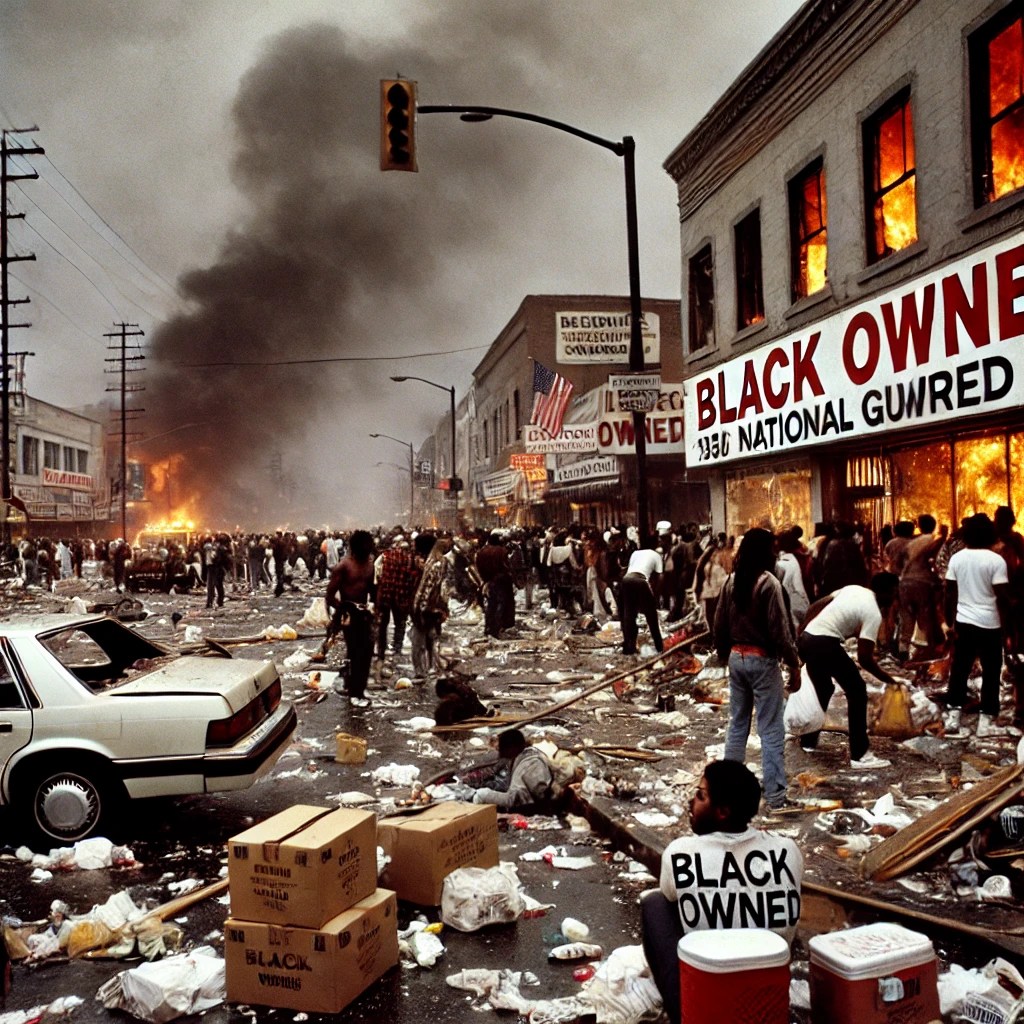
I was only a child. I remember all the yelling, the glass breaking, and my people destroying our own city. The video of Rodney King aired, showing him being brutally beaten by four LAPD officers in 1991. The footage shocked the nation and sparked conversations about racial injustice and police brutality. On April 29, 1992, the officers were found not guilty. This happened despite clear evidence of their excessive force. As a result, the city was in an uproar. It was chaos—a city on fire. I remember seeing it on TV. While it was happening, my mother told us that it was too dangerous to go outside.
My older brother Cleo wanted to go out looting. He told my mom he could get us a new television. It was something like that. My mom wasn’t having it though. She didn’t want him to get hurt or killed, so she pleaded with him to stop even thinking about it. The city had been torn apart.
Broken windows, burned-up stores, and you could buy many things brand new from somebody in an alley. As I grew up, I often wondered if that is where the term “Black Market” comes from. I can still see all the Black-Owned signs posted in windows. Business owners placed them on storefronts to protect their businesses from being destroyed. But the rage was indiscriminate—whether it was Black, Korean, or any other ethnicity, people’s livelihoods were at stake.
The LA Riots lasted six days, leaving over 60 people dead and causing nearly a billion dollars in damage. The National Guard had to be called in to restore order. To this day, the city hasn’t been the same. The riots exposed deep-seated issues of race, economic inequality, and distrust in law enforcement. These are scars that LA carries even now.


 Joseph Mekael Page
Leave a comment